




Researchers' Profiles
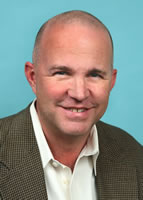
David Farabee, Ph.D.
ISAP Co-Director
David Farabee, Ph.D., is Professor-in-Residence of Psychiatry and Biobehavioral Sciences at the University of California, Los Angeles and a Principal Investigator at the Integrated Substance Abuse Programs (ISAP). Prior to this he served as lead analyst for criminal justice research at the Texas Commission on Alcohol and Drug Abuse (1992-1995), and as Assistant Professor of Psychiatry and Research Scientist at the University of Kentucky Center on Drug and Alcohol Research (1995-1997).
Dr. Farabee has published in the areas of substance abuse, adult and juvenile crime, HIV/AIDS, and offender treatment, was co-editor of the books Treatment of Drug Offenders (2002; New York: Springer) and Treating Addicted Offenders: A Continuum of Effective Practices, Volumes I and II (2004, 2007; New York: Civic Research Institute), author of, Rethinking Rehabilitation: Why Can't We Reform Our Criminals? (2005; Washington, D.C.: AEI Press), and is co-editor of the Offender Programs Report.
- University of Texas, Austin, B.A., Psychology, 1985
- Texas A&M University, Commerce, M.S., Psychology, 1988
- Texas Christian University, Ft. Worth, Ph.D., Experimental Psych., 1992
- Drugs & Crime
- Program Evaluation
- Offender Interventions
2014 Farabee, D., Zhang, S.X., & Wright, B. An experimental evaluation of a nationally recognized employment-focused offender reentry program. Journal of Experimental Criminology, 1-14.
2013 Farabee, D, Cousins, S.J., Brecht, M.L., Antonini, V.P., Lee, A.B., Brummer, J., Hemberg, J., Karno, M., & Rawson, R.A. A Comparison of four telephone-based counseling styles for recovering stimulant users. Psychology of Addictive Behavior, 27.1, 223. (PMCID: PMC3500433, NIHMSID: NIHMS396172).
2013 Farabee, D., McCann, M., Brecht, M.L., Cousins, S.J., Antonini, V.P., Lee, A.B., Brummer, J., Hemberg, J., Karno, M. & Rawson, R.A. An analysis of relapse prevention factors and their ability to predict sustained abstinence following treatment completion. American Journal of Addictions, 22(3), 206-211.
2012 Farabee, D. Zhang, S.X., & Wright, B. Managing an on-the-spot lottery in re-entry services. Journal of Experimental Criminology, 8,241–253.
2012 Karno, M., Farabee, D., Brecht, M.L., & Rawson, R.A. Patient reactance moderates the effect of directive telephone counseling for methamphetamine users. Journal of Studies on Alcohol and Drugs, 73, 844–850.
2012 Wright, B., Zhang, S.X., & Farabee, D. A squandered opportunity: A review of SAMHSA’s National Registry of Evidence-based Programs and Practices (NREPP) for offenders. Crime & Delinquency, 6, 954 – 972.
2011 Farabee, D., Hawken, A., & Griffith, P. Tracking and incentivizing substance abusers in longitudinal research: Results of a survey of NIDA-funded investigators. Journal of Addiction Medicine, 5(2), 87-91.[PMC3140135]
2011 Farabee, D., Zhang, S.X., & Yang, J. A preliminary examination of offender needs assessment: Are all those questions really necessary? Journal of Psychoactive Drugs, 43, 1-7.
2004 Farabee, D., Hser, Y.H., Anglin, M.D., & Huang, D. Recidivism among an early cohort of California’s Proposition 36 offenders. Criminology & Public Policy, 3(4), 501-522.
2004 Farabee, D., Shen, H., & Sanchez, S. Program-level predictors of antipsychotic medication adherence among parolees. International Journal of Offender Therapy and Comparative Criminology, 48(5), 561-571.
2004 Farabee, D., & Shen, H. Antipsychotic medication adherence, cocaine use, and recidivism among a parolee sample. Behavioral Sciences and the Law, 22, 467-476.
2003 Messina, N., Farabee, D., & Rawson, R. Treatment responsivity of cocaine-dependent patients with antisocial personality disorder in cognitive behavioral and contingency management interventions. Journal of Consulting and Clinical Psychology, 71(2), 320-329.
2002 Farabee, D. Editor of special issue: Making people change: The effectiveness of coerced psychological treatment. Criminal Justice and Behavior, 29(1).
2002 Farabee, D. Re-examining Martinson’s critique: A cautionary note for evaluators. Crime & Delinquency, 48(1), 189-192.
2002 Farabee, D. Addicted to treatment: Ideology is trumping science in our quest to rehabilitate offenders. Forbes, December 23. p.60.
2002 Farabee, D., Prendergast, M.L., & Cartier, J.Alcohol, the “un-drug.” Psychiatric Services, 53 (11), 1375-1376.
2002 Farabee, D., Rawson, R.A., & McCann, M. Adoption of drug avoidance activities among patients in contingency management and cognitive-behavioral treatments. Journal of Substance Abuse Treatment, 23, 343-350.
2002 Farabee, D., Shen, H., & Sanchez, S. Perceived coercion and treatment need among mentally ill parolees. Criminal Justice and Behavior, 29(1), 76-86.
2002 Rawson, R.A, Huber, A., McCann, M., Shoptaw, S., Farabee, D., Reiber, C., & Ling, W. A comparison of contingency management and cognitive-behavioral approaches during methadone maintenance treatment for cocaine dependence. Archives of General Psychiatry, 59, 817-824.
2001 Farabee, D., Joshi, V., & Anglin, M.D. Addiction careers and criminal specialization. Crime & Delinquency, 47(2), 196-220.
2001 Farabee, D., Shen, H., Hser, Y.I., Grella, C., & Anglin, M.D. The effect of substance abuse treatment on adolescent criminality. Journal of Adolescent Research, 16(6), 679-696.
1999 Farabee, D., Prendergast, M.L., Cartier, J., Wexler, W., Knight., K., & Anglin, M.D. Barriers to implementing effective correctional treatment programs. The Prison Journal, 79(2), 150-162.
1998 Farabee, D., Leukefeld, C.G., & Hays, L.R. Accessing drug abuse treatment: Perceptions of out-of-treatment injectors. Journal of Drug Issues, 28(2), 381-394.
1998 Farabee, D., Prendergast, M.L., & Anglin, M.D. The effectiveness of coerced treatment for drug-abusing offenders. Federal Probation, 62, 3-10.
1996 Farabee, D., & Fredlund, E.V. Self-reported drug use among recently admitted jail inmates: Estimating prevalence and treatment needs. Substance Use and Misuse, 31, 423-435.
1995 Farabee, D., Simpson, D.D., Dansereau, D., & Knight, K. Cognitive inductions into treatment among drug users on probation. Journal of Drug Issues, 25, 669-682.
1993 Farabee, D., Nelson, R., Spence, R. Psychosocial profiles of criminal justice- and non-criminal justice-referred clients in treatment. Criminal Justice and Behavior, 20, 336-346.
Books
2002 Leukefeld, C.G., Tims, D., & Farabee, D. (Eds.) Treatment of Drug Offenders: Policies and Issues.New York: Springer.
2004 Knight, K. & Farabee, D. (Eds.), Treating Addicted Offenders: A Continuum of Opportunities. New York: Civic Research Institute.
2005 Farabee, D. Rethinking Rehabilitation: Why Can’t We Reform Our Criminals? Washington, DC: American Enterprise Institute.
2007 Knight, K. & Farabee, D. (Eds.), Treating Addicted Offenders: A Continuum of Opportunities, Vol II. New York: Civic Research Institute.